
Villa life · 4 MIN READ
Clear villa pool water: chlorine, smell and small everyday habits
What does clear water tell you? Understand pool smell, pH and product percentages, with practical habits for a comfortable private-villa swim.
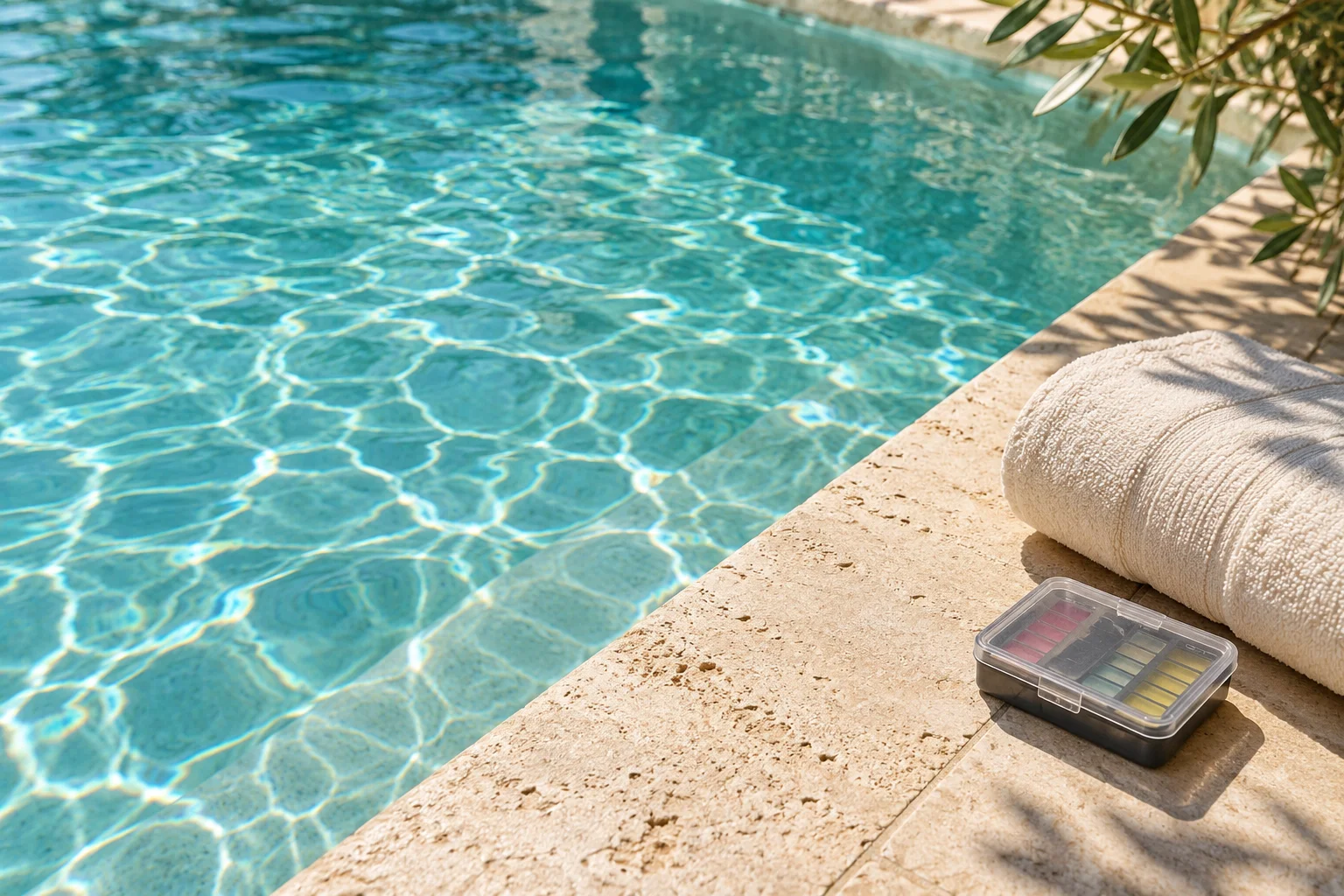
The first things you notice about a pool are its colour and the light on the surface. Behind an enjoyable swim is a less visible routine: circulation, filtration, cleaning and water testing. You do not need to become a pool technician on holiday. Knowing a few basics simply helps you ask useful questions and recognise when to contact the team looking after the water.
Clear water is only part of the picture
Removing leaves and cleaning the bottom deal with visible debris. Filtration helps remove material as water circulates. Disinfection and water balance need their own attention. CDC’s pool-operation guidance brings together equipment maintenance, water checks and records.
A photograph cannot establish water quality, and an absence of smell cannot replace testing. On arrival, it is useful to ask when maintenance takes place and whom to contact if you notice a change. That simple conversation is more valuable than judging the pool by its shade of blue.
What does the familiar pool smell mean?
Chlorine helps control germs. In reacting with sweat and other contaminants, it can also form chloramines. CDC explains that these compounds often account for the smell people associate with chlorine at a pool and can irritate eyes and airways.
A strong smell therefore should not be read as proof of excellent cleaning. Equally, water without a noticeable smell is not automatically suitable for swimming. The aim is appropriate measured water conditions and comfortable use, rather than a particular scent.
What do chlorine-product percentages describe?
The percentage on a product describes its contents, not the percentage of chlorine that should be present in a swimming pool. For example, a manufacturer’s technical catalogue lists different products with 56% and 90% chlorine content. Pool-water readings use units such as parts per million, representing far lower concentrations.
A percentage alone does not mean “healthier”, “odourless” or “only for private villas”. The active ingredient, label instructions, pool volume and existing water readings all matter. A number used informally is not enough to identify a product or calculate an application. Leave chemical treatment to the maintenance team.
Why does pH matter as well?
CDC’s home-pool guidance recommends monitoring free chlorine and pH together. pH affects how chlorine works and the comfort of the water. Sunlight, use and contaminants can change chlorine levels, so treatment needs repeated checks rather than a single application.
Correctly used products help reduce risk, but no pool chemical can be promised to be harmless under every condition or free of irritation for every person. Tell the team about relevant sensitivities before your stay and follow your clinician’s advice for individual health concerns. A general article cannot establish whether a particular pool is suitable for a particular person on a particular day.
Small habits that help
Healthy-swimming advice includes showering before entering, avoiding swallowing pool water and staying out when you have diarrhoea. Those habits matter in a private pool too. After the beach, rinse sand and dirt off in the shower before swimming.
Respect maintenance periods and wait for the team’s guidance on when to re-enter. Do not adjust dosing equipment or enter the plant room. Keep children under continuous supervision around water; a private setting does not remove the need for attention.
When should you contact the team?
If water becomes noticeably cloudy, an unusual strong smell appears or you develop stinging eyes or skin discomfort, pause your swim and report it. Do not try to solve the problem by adding chemicals yourself. The water needs to be checked and the cause assessed. Seek medical advice if symptoms persist.
When planning your stay with Çırağan, review the villa’s pool features and ask us about its maintenance arrangements. Knowing how to get help leaves more of your holiday for swimming and relaxing.
YOUR NEXT GOOD DAY
Let’s find your holiday home.
Share your dates and ideas. We’ll work out the details together.
KEEP EXPLORING
A day on the Lycian Way: planning a walk from Kalkan or Kaş
You need not walk the whole Lycian Way. Choose a manageable day section, prepare for the terrain and arrange your return during a Kalkan or Kaş holiday.
Read the story ↗
A slow day in Kaleköy and Simena: castle, village and sea
Meet Kaleköy in the Kekova region: Simena Castle, life by the water and a simple way to include a village visit in your boat-day plans.
Read the story ↗